
Why Movies Don’t Feel Real Anymore (The Truth About Modern Cinema)

Have you ever walked out of a $200 million blockbuster feeling… nothing? You’re not alone. In 2026, films are at a peculiar point in their history. We can make every pore on a computerised face and make the mechanics of collapsing galaxies look real, yet current movies frequently feel less real and more shallow than a gritty 1970s thriller filmed on 35mm film.
The magic isn't gone; it's just been replaced. We need to delve deeper than "bad CGI" to figure out why films don't seem real anymore. We need to look at the loss of tactile filmmaking, the rise of digital cinematography, and the subtle ways that technology has transformed immersion itself.
The Death of Indexicality
The Death of Indexicality (When Nothing is Tangible)
Film academics use the word "indexicality" to talk about the initial force of cinema, which is the sense that what you see on screen was once in front of a camera. There was a genuine chair if you saw one. If there was an explosion, something really went off.
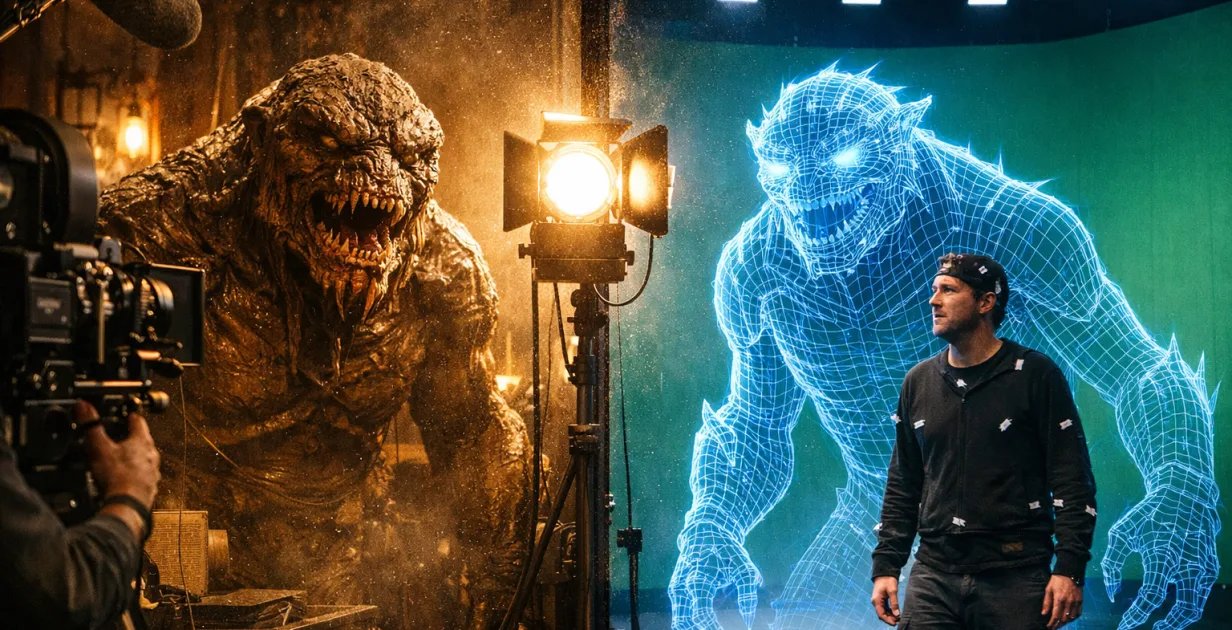
A lot of the time, that physical connection is severed now. A lot of recent movies are shot in front of green screens or LED "Volume" walls. When actors behave in places that don't really exist, our brains pick up on small differences, such lighting that doesn't match, depth that doesn't seem right, and textures that aren't real. Something feels off, even if we can't put our finger on it.
Immersion becomes tenuous when there is no physical presence.
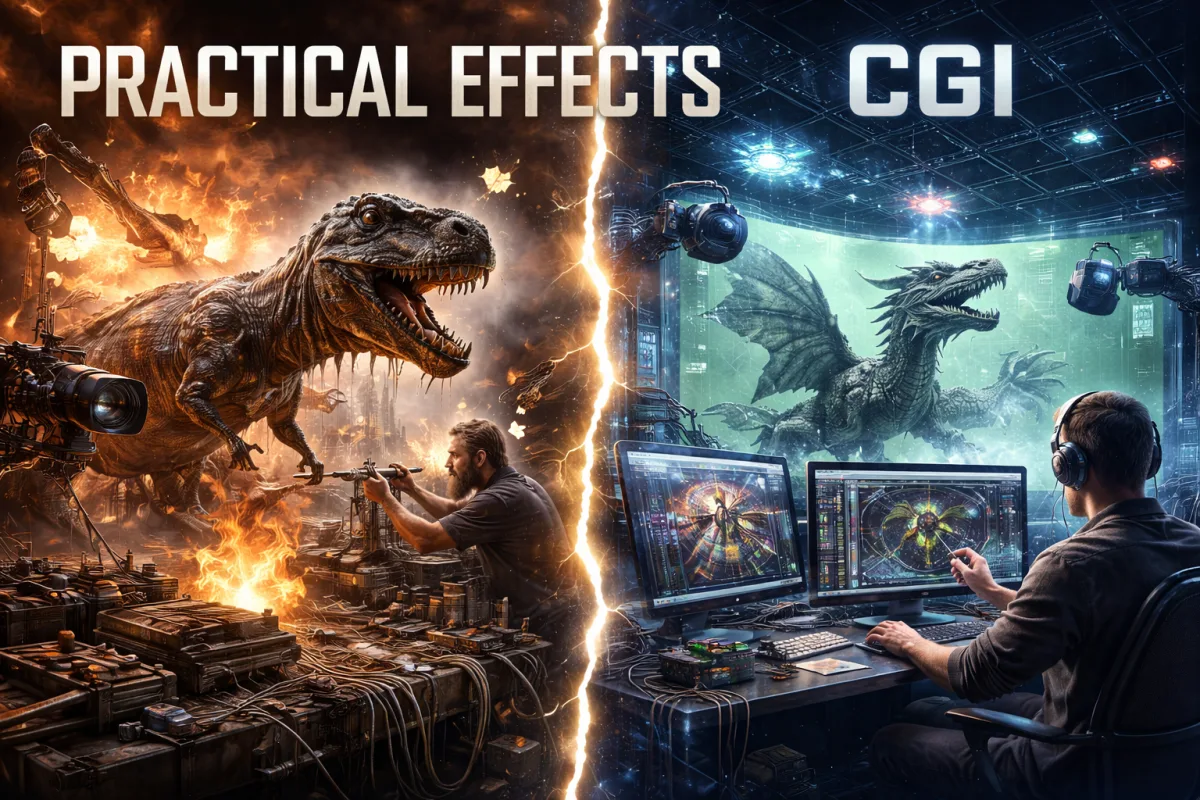
Practical Effects vs. CGI
Practical Effects vs. CGI
The argument over real effects vs CGI isn't about whether one is "better" it's about "weight." CGI is a great tool, but it doesn't always look authentic to the eye.
- Use actual props, fireworks, and animatronics for practical effects. The camera shows actual shadows and real physics.
- CGI often makes action look "weightless." Characters move too quickly or jump too far without the tension in their muscles that gravity needs.
A research from 2025 that was reported on in The Liberty Champion said that even though CGI technology is more powerful than ever, it is often utilised as a shortcut. It has become the reality instead of a way to make it better. When everything is digital, nothing feels at stake.
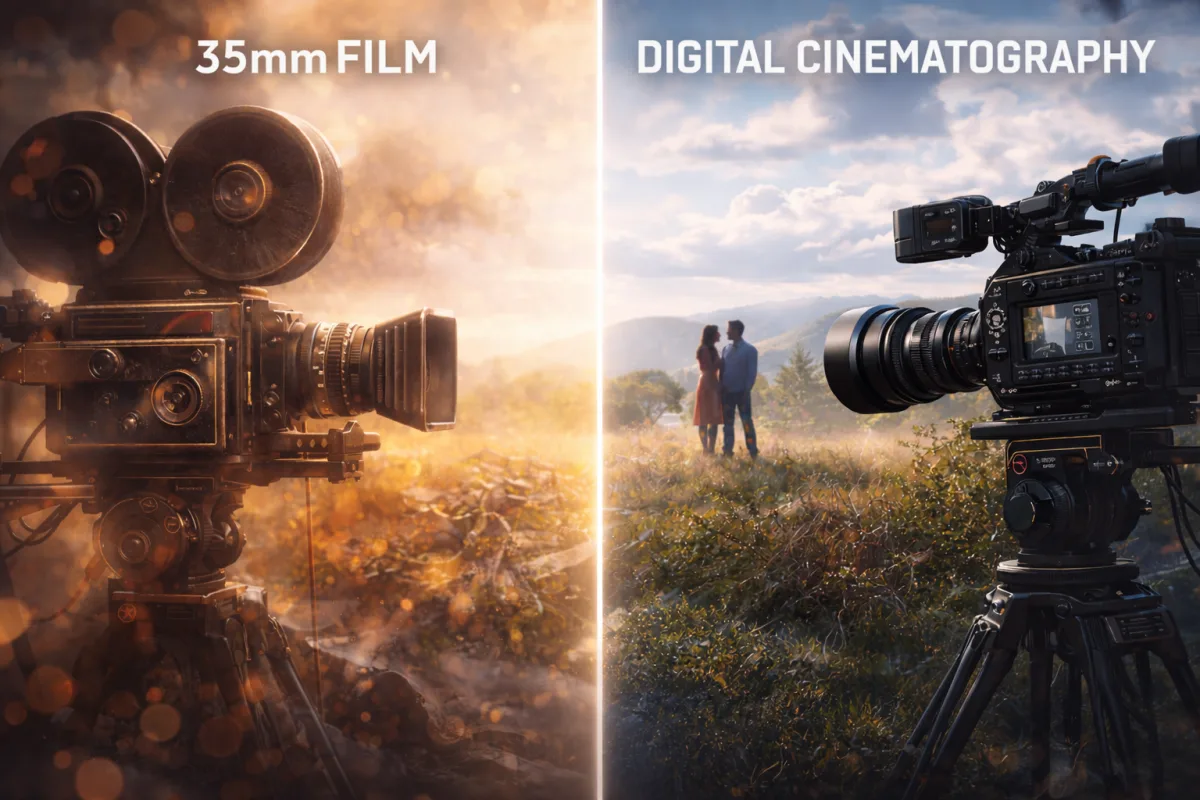
The Digital Cinematography Trap
The Digital Cinematography Trap
The shift from 35mm film to digital cinematography has changed the "texture" of movies. Digital sensors record everything in perfect clarity. This may sound like a good thing, but it often takes away the "dreamlike" nature of films.
Flat Lighting and Post-Production Tweaking
In the past, cinematographers had to stick to a certain "look" on site. These days, films are typically shot "flat" (in Log format) so that they may be edited in whatever way they choose. This seems like a good way to do things, but it doesn't have any use. Changing the lighting, colour, and even the actor's face in an edit suite may frequently take away the scene's "soul."
- Shallow Depth of Field: Many current films utilise very fuzzy backdrops too much to disguise digital sets. Dawn Images says this can be "exhausting and obviously fake" contrasted to the deep focus employed in old films.
- Colour Grading: The trend of using "teal and orange" or "gritty" styles that are less colourful has grown so common that it makes all films appear like they are set in the same world.
The
The "Content" Factory and Audience Disconnect
With the emergence of streaming services (OTT), the focus has changed from "movies" to "content." According to estimates from Bennett University, the worldwide OTT business would be worth more than $223 billion by 2026. Because of this huge demand, things are made in factories.
Movies lose their edge when they are produced to please an algorithm instead of an artistic vision. Franchises, remakes, and "safe" storytelling are all popular in current movies, which means we see the same three-act frameworks over and over again. This makes it hard for people to really get into the movie since they constantly know what's going to happen next.
The Psychology of Immersion, Why Our Brains Check Out
The Psychology of Immersion, Why Our Brains Check Out
Psychologically, immersion (or "narrative transportation") necessitates a loss of self-awareness. Our brains "glitch" when we observe a "weightless" CGI explosion or a face that has been clearly "de-aged" with AI.
This is the Uncanny Valley...It's not only for faces... it's for whole universes. When the physics of a vehicle pursuit don't make sense, our brains switch from "experiencing" the tale to "observing" the technology. The movie doesn't feel genuine anymore after the changeover.
Lack of Natural Light
Lack of Natural Light
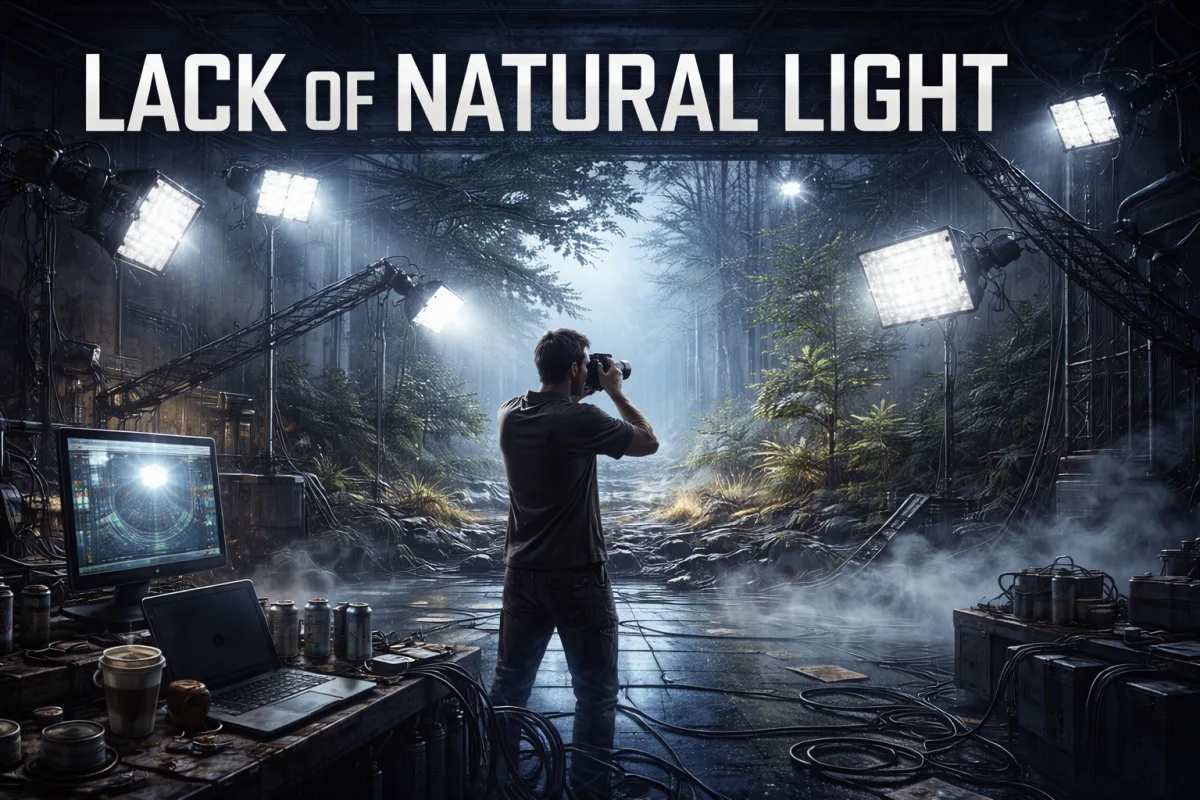
One of the biggest changes in recent movie trends is the switch from filming on location to using The Volume (LED wall technology). It was a huge step forward for programs like The Mandalorian, but its usage in big-budget movies has caused a certain type of visual stagnation.
Light is all over the place in the actual world. It varies every second and bounces off of windows and grass. An engine controls the light on a digital stage. This leads to:
- Parallax Errors: Even with high-end tracking, the actor and the background might feel "locked," like a real lens moving across space doesn't change the way things look.
- Light Contamination: LED walls typically create a gentle, diffused light that lacks the "bite" or harshness of the sun, making every scene, regardless of whether it's located in a desert or a jungle, feel like it was filmed in the same poorly lit room.
American Cinematographer (2025 study) says that the Volume's convenience frequently takes the place of the "happy accidents" that happen when you explore locations. This makes the product appear fake and if it was made in a lab.
| Feature | Classic Cinematic Realism | Modern Digital "Hyper-Realism" |
|---|---|---|
| Motion Blur | Organic, caused by physical shutter. | Simulated, often looking "streaky" or unnatural. |
| Black Levels | Deep but detailed (shadows you can feel). | "Crushed" or "Lifted" digitally for stylistic consistency. |
| Physics | Constrained by safety, gravity, and the physical world. | Unlimited, leading to a "weightless" or floaty feeling. |
| Focus | Imperfect requires pulling focus manually, creating depth. | Often digitally sharp across the entire frame lacks texture. |
How Can We Fix It?
Going back to "real" cinema doesn't mean giving up technology, it means bringing back the tactile.
- Return to Location: Real places have "happy accidents" in lighting and texture that a computer can't copy.
- Hybrid Effects: Using CGI to make practical stunts seem better instead of replacing them.
- Aesthetic Commitment: Directors and cinematographers need to make bold choices on set instead than "fixing it in post."
Movies don't feel genuine anymore, not because technology became better, but because it took away limits.
Limitations used to make people more creative. Gravity was important. Light was bad. Sets had weight.
The films that last in 2026 won't be the ones that are the most polished; they'll be the ones that seem real. Not perfect. In person. Weak.
Realism doesn't care about resolution.
It's about not giving in.
Check These Films - The Perfect Examples of Cinema That Feels Real
If you miss movies that feel tangible, grounded, and physically present, these films prove that realism isn’t dead. it just requires commitment to the real world.
6
Mad Max: Fury Road (2015)

This movie is the best example of how to make a movie in the current world. Flipped real cars. There were real explosions. Real stunt people put real physics on the line.
Even when CGI was utilised, it made real action better instead of taking its place. The weight of metal, sand, and fire gives every frame physical danger — something many modern blockbusters lack.
👉 It shows that realism isn't about obsolete technology; it's about being committed to gravity.
5
The Dark Knight (2008)

Christopher Nolan turned a genuine 18-wheeler vehicle upside down on a real roadway.
The movie uses IMAX cameras and real locations to make a comic book narrative feel real. Gotham is Chicago because it is Chicago.
When superhero films are filmed in actual places, they might even seem genuine.
4
The Irishman (2019)

An example that goes against that.
Martin Scorsese employed cutting-edge de-aging technology to make performers look decades younger. Technically amazing, yet a lot of people thought something was "off."
The body language didn’t match the digital face. That strange mismatch destroyed the immersion.
This shows how hyper-real tech can unintentionally reduce emotional realism.
3
Inception (2010)
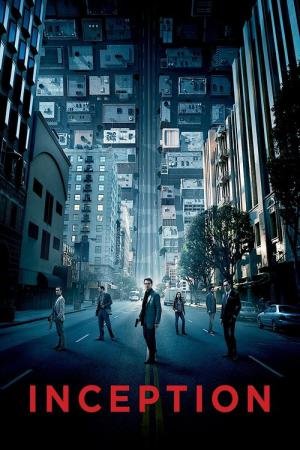
It seems genuine even if it bends reality.
The combat in the revolving corridor was set up such that the passageway really spun. Actors had to fight against gravity.
CGI was employed, but it was combined with real sets. This is a great example of hybrid filmmaking done correctly.
2
Children of Men (2006)

Long shots. Light from the sun. Cameras you hold in your hand.
It feels like the turmoil is real since it happens without any clear breaks. The camera acts like a person, not a machine. How a scene is filmed, not just what's in it, frequently makes it look real.
1
Top Gun: Maverick (2022)

Actors were on genuine combat planes.
The real G-forces physically distorted their faces, something no green screen can replicate.actual metal was struck by actual sunshine.
People could see right away that something was different, which is why it hit home so hard.
Stress on the body leads to emotional honesty.
The difference isn’t resolution.
It’s resistance.
It’s gravity.
It’s the real world pushing back.
Weekly trending