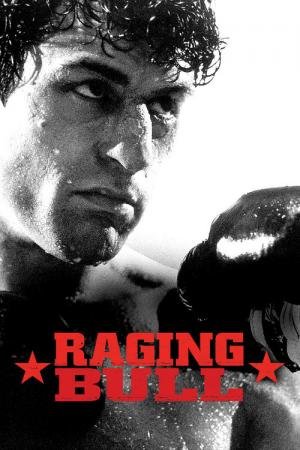
Raging Bull (1980)

Raging Bull
⭐ 8.1/10 IMDb
Genre: Biography Drama Sport
Country: USA
Duration: 2h 9m | Year: 1980

When Jake LaMotta dominates the boxing ring, he’s a formidable prizefighter. But the same aggression he shows in the ring spills into his personal life, making him volatile and unpredictable with family and friends. Despite his desire for love and stability, his temper threatens to destroy everything he holds dear.

RedemptionBrutalityDysfunctional familyMafiaViolentRise and fallJealousyCharacter studyBoxingBoxerBad temperRage ...

Official Trailer • Courtesy of YouTube

Movie Team / Crew Detail

Raging Bull - Movie Crew Info

  • Director: Martin Scorsese
  • Producer: Irwin Winkler
  • Screenplay: Paul Schrader, Mardik Martin
  • Based on: "Raging Bull: My Story" by Jake LaMotta and Joseph Carter
  • Cinematographer: Michael Chapman
  • Editor: Thelma Schoonmaker
  • Music Composer: Pietro Sartori
  • Production Designer: Richard Sylbert
  • Costume Designer: Patricia Norris
  • Casting Director: Juliet Taylor

Movie Summary

Raging Bull tells the intense and gripping story of Jake LaMotta, a talented middleweight boxer whose violent temper and self-destructive behavior both fuel his success in the ring and ruin his personal life. The film follows Jake’s rise from a tough kid growing up in Brooklyn to becoming a world champion boxer. His raw talent and fierce determination make him a formidable opponent, but his inability to control his anger and jealousy causes turmoil outside of boxing.

Jake’s relationship with his brother Joey is central to the story. Joey acts as Jake’s manager and closest confidant, always there to support him, but their bond is tested heavily as Jake’s paranoia and jealousy grow. Jake’s marriage to Vickie also suffers as his violent outbursts and suspicion of infidelity strain their relationship. He pushes away the people who care about him most, driven by insecurities and rage.

The film is as much about Jake’s personal struggles as it is about his boxing career. Scenes in the ring are intense and raw, showing the brutal physicality of the sport. Outside the ring, the story dives deep into Jake’s emotional pain and isolation. His anger is a defense mechanism that keeps people at a distance but ultimately destroys his chances at happiness.

Raging Bull captures the complexity of a flawed man who is both admired and pitied. Jake’s fights aren’t just physical battles; they symbolize his internal fight with jealousy, rage, and vulnerability. The black-and-white cinematography adds to the gritty, harsh atmosphere of the film, making the story feel timeless and impactful.

As Jake’s boxing career slows down and he ages, he is forced to confront the consequences of his behavior. He reflects on his mistakes and the damage he’s caused, leading to moments of regret and a search for redemption. However, the film does not offer a neat resolution. Instead, it presents a raw, honest portrait of a man who struggles to control his demons but can never fully escape them.

Raging Bull is more than just a sports movie; it’s a powerful character study of a man battling with his own nature. Through Jake LaMotta’s story, the film explores themes of pride, violence, love, and self-destruction. It leaves viewers with a profound understanding of how talent and rage can coexist, shaping a person’s life in both extraordinary and tragic ways.

What This Movie Teaches Us

Raging Bull teaches the audience the destructive power of anger and unresolved pain. Through Jake LaMotta’s turbulent life, the film shows how self-destructive behavior and jealousy can ruin relationships and personal happiness. It reveals the harsh reality that talent alone isn’t enough; inner demons must be faced honestly. Ultimately, it’s a poignant meditation on redemption and the human struggle to find peace amidst chaos, reminding us that true strength lies in self-awareness and forgiveness.

Awards & Nominations

Awards

  • Academy Awards (1981)
    Best Actor – Robert De Niro
    Best Film Editing – Thelma Schoonmaker

  • BAFTA Awards (1982)
    Best Actor in a Leading Role – Robert De Niro

  • Golden Globe Awards (1981)
    Best Actor – Motion Picture Drama – Robert De Niro

  • National Society of Film Critics Awards (1981)
    Best Actor – Robert De Niro

  • New York Film Critics Circle Awards (1980)
    Best Actor – Robert De Niro

Iconic Scenes

  1. The opening boxing match: Jake LaMotta’s brutal, bloodied face fills the frame as punches rain down, capturing the raw, relentless violence of the ring.
  2. Jake practicing in the mirror: Sweat drips as he shadowboxes fiercely, his reflection revealing both determination and inner torment.
  3. The late-night diner confrontation: Tense silence shatters as Jake explodes in jealous rage, his face contorted with fury, highlighting his volatile personality.
  4. The final fight: Slow-motion punches and heavy breathing emphasize Jake’s physical and emotional exhaustion, a poignant end to his turbulent career.

Controversies

"Raging Bull" (1980), directed by Martin Scorsese, faced controversy primarily due to its intense violence and raw depiction of boxer Jake LaMotta's turbulent life. Some critics debated the film's unflinching portrayal of domestic abuse and toxic masculinity, raising concerns about glamorizing such behavior. Additionally, the film's monochrome cinematography and graphic fight scenes sparked discussions about cinematic violence's impact on audiences. While not heavily censored, the movie's explicit content led to an R rating, limiting younger viewers. Despite initial mixed reactions, "Raging Bull" is now acclaimed for its artistic merit and psychological depth, mitigating early criticisms.